Clear Signals, Safer Seas: A Boater’s Guide To Communication
Out on open water, clear communication can make the difference between a smooth sail and a serious problem. Unlike roads, waterways rely on shared signals, sounds, and lights to keep everyone aware of one another’s intentions. Learning these systems helps sailors create a safer environment.
On this page:
Visual Signals Every Boater Should Know
Visual signals are often the first line of communication. Flags are among the most recognizable tools. A red flag with a white diagonal stripe signals a diver in the water and alerts nearby vessels. The international distress flag, orange with a black square and circle, communicates that a vessel needs immediate assistance.
Hand signals also matter, particularly in marinas or when approaching docks. Raised arms waved overhead often indicate distress, while controlled gestures between crew members support safe docking and anchoring. At night, flares provide high-visibility alerts, signaling emergencies when radio contact is limited.
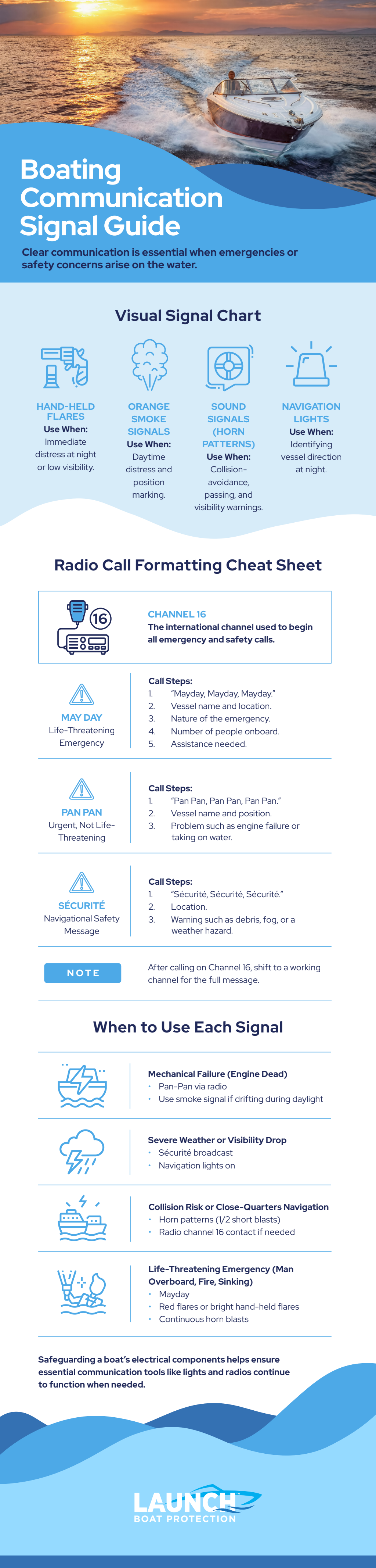
Check out the infographic below for more information.
Sound Signals and What They Mean
Sound signals help communicate intent when visibility is reduced or when vessels are close to each other. Horn blasts follow standard patterns that every boater should recognize. One short blast often signals an intention to pass on the port side. Two short blasts indicate passing on the starboard side. Three short blasts commonly communicate that a vessel is moving in reverse.
Extended blasts also play a role. A prolonged blast lasting four to six seconds signals a vessel’s presence in areas with limited visibility. Five or more short blasts act as a warning signal, communicating uncertainty or concern about another vessel’s actions.
Light Signals After Sunset
When daylight fades, navigation lights take over as a primary communication tool. These lights reveal a vessel’s direction, size, and activity. Red and green sidelights show port and starboard orientation, while white lights indicate stern position or all-around visibility for smaller boats.
Flashing lights also carry meaning. A rapidly flashing white light can signal distress. Understanding these patterns helps sailors interpret situations quickly and respond with appropriate caution.
Radio Communication on the Water
Marine radios provide direct communication between vessels and with shore-based authorities. Channel 16 remains the primary distress and hailing channel in the United States. Clear, concise messages reduce confusion and speed up response times.
Using proper radio etiquette matters. Messages should identify the vessel being contacted, state the sender’s vessel name, and clearly explain the reason for communication. Keeping transmissions brief ensures that channels remain available for urgent traffic.
Coordinating with Crew and Other Vessels
Effective communication starts onboard. Clear verbal cues, established roles, and pre-agreed signals help crews work together during maneuvers. This internal coordination becomes especially important during challenging conditions.
External communication also extends beyond safety. When coordinating assistance, towing, or unexpected repairs, understanding how to signal supports smoother outcomes. Some sailors also consider the value of preparation, including working with boat warranty companies that provide coverage when equipment issues arise.
Clear communication builds trust between boaters and creates safer shared waterways. By learning and respecting established signals, sailors contribute to a culture of awareness that benefits everyone.
Did you find the answer to your specific question?
👍 0 👎 0
Leave a comment